Toys for Little Ones: How to Choose Safe and Sensory-Stimulating Toys


Toys for Little Ones: How to Choose Safe and Sensory-Stimulating Toys
When a baby begins to explore the world, it happens first and foremost through the senses. Toys play a key role in this early development – supporting motor skills, curiosity, and emotional growth. But with so many colorful options on the market, it can be hard to know what’s truly safe and beneficial. Here’s a guide to help you choose toys that both protect and engage your little one.
Safety First – The Most Important Factor
For infants and toddlers, safety is non-negotiable. Small parts, sharp edges, and toxic materials can pose serious risks, so always check that a toy meets current safety standards.
- Look for the ASTM or CPSC certification. Toys sold in the U.S. should comply with safety standards set by the Consumer Product Safety Commission (CPSC) and ASTM International.
- Pay attention to age recommendations. These labels are based on both safety and developmental appropriateness.
- Avoid small detachable parts for children under three years old.
- Choose non-toxic materials and look for labels that say “BPA-free,” “phthalate-free,” and “lead-free.”
A good rule of thumb: if a toy smells strongly of chemicals or perfume, skip it. That’s often a sign of poor-quality materials.
Sensory Play – Engaging Sight, Sound, and Touch
The first years are all about discovering the world through the senses. Toys that stimulate sight, hearing, and touch help babies make sense of their surroundings and build coordination.
- Soft fabric books with different textures and bright colors invite exploration.
- Rattles, shakers, and musical toys strengthen hearing and rhythm awareness.
- Mirrors and high-contrast patterns capture a baby’s attention and support visual development.
- Teething rings made of natural rubber or silicone soothe gums and encourage tactile play.
The best toys often engage multiple senses at once and can be used in different ways as your child grows.
Materials That Matter
Many parents today prefer toys made from natural materials like wood, cotton, and wool. These choices are not only aesthetically pleasing but also healthier and more sustainable.
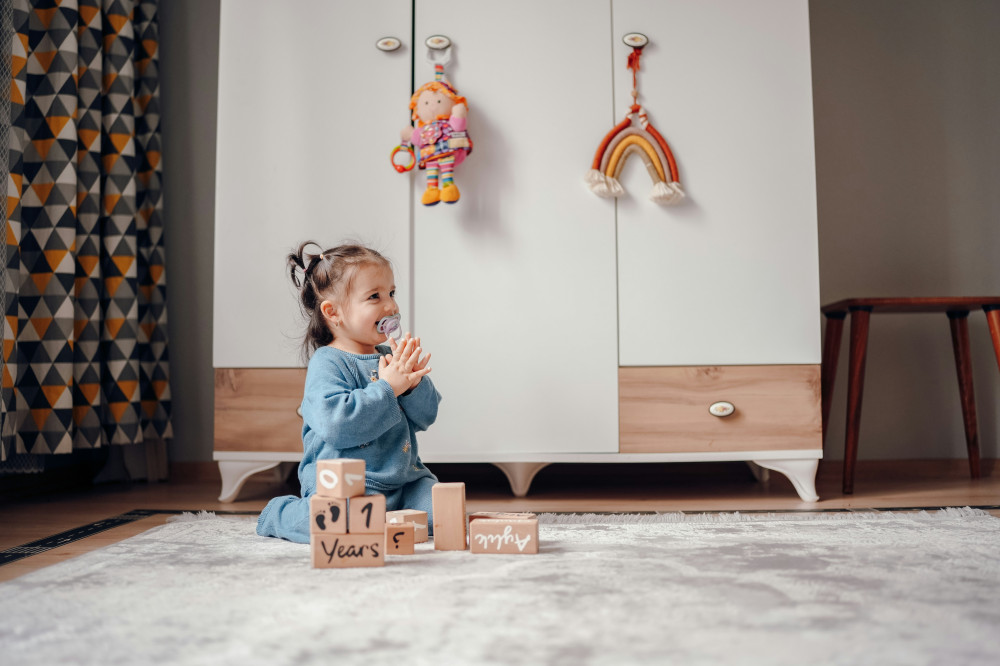
- Wooden toys are durable, timeless, and often free from harmful chemicals. Make sure the finish is non-toxic and lead-free.
- Fabric toys should be washable, since babies love to put everything in their mouths.
- Plastic toys can be practical, but choose reputable brands that clearly state they are free from PVC and phthalates.
It’s better to invest in a few high-quality toys than to fill the playroom with cheap, disposable ones. Quality toys last longer and are safer for both your child and the planet.
Matching Toys to Developmental Stages
A child’s needs change rapidly in the first few years. Choosing toys that match their developmental stage helps them learn and grow with confidence.
- 0–6 months: Toys that can be seen, heard, and touched – like rattles, soft books, and play gyms.
- 6–12 months: Toys that can be grasped, shaken, and chewed. Stacking rings, soft blocks, and mirrors are great options.
- 1–2 years: Toys that encourage movement and imitation – such as push toys, shape sorters, and dolls.
- 2–3 years: Toys that spark imagination and fine motor skills – like building blocks, play kitchens, and simple puzzles.
The key is to let your child explore at their own pace and experience small successes along the way.
Less Is Often More
It’s tempting to fill the nursery with toys, but too many options can be overwhelming. Children often play more creatively and with better focus when they have fewer choices.
Try rotating toys – store some away for a while and bring them back later. This keeps playtime fresh and helps your child rediscover old favorites with new interest.
Læs også:



Play Together – You’re the Best Toy
Even the most thoughtfully designed toy can’t replace the joy of shared play. When you engage with your child, you help them learn to communicate, imitate, and understand emotions. A simple ball game or a nursery rhyme can be far more meaningful than the most high-tech gadget.
It’s not about entertaining your child but about being present – following their lead, smiling, repeating their sounds, and sharing the joy of discovery.
Creating a Safe and Stimulating Play Environment
Choosing toys for little ones is about finding the right balance between safety, sensory stimulation, and quality. When you choose with care – and play with your child at eye level – you create the best foundation for both security and growth.
Læs også: